Which tour, which route, what to check
Mount Fuji day tour: how to choose
Group coach, Hakone route, private tour or public bus: how the ways to see Fuji from Tokyo differ, and what to check on a listing before you book.
Check dates and availability ↗Quick answer
For one day and the classic views, a coach tour of the Yamanashi side covers the most ground: Lake Kawaguchi, the Chureito Pagoda, Oshino Hakkai and a stop on the mountain. Choose a Hakone tour for a ropeway and a lake boat, a private tour to set your own stops, or public transport if you have more time. Whichever you pick, no tour can guarantee a view of Fuji.
Three ways to see Fuji from Tokyo
| Group coach | Private tour | Bus or train | |
|---|---|---|---|
| Route set by | The operator | You and the guide | You |
| Transport | Shared coach | Private group | Highway bus or train |
| Itinerary | Fixed stops | Custom itinerary | Whatever you plan |
| Payment | Per person | Per group | Fare per leg |
| Best for | One day, no planning | Your own pace | More days, flexible |
What this tour is
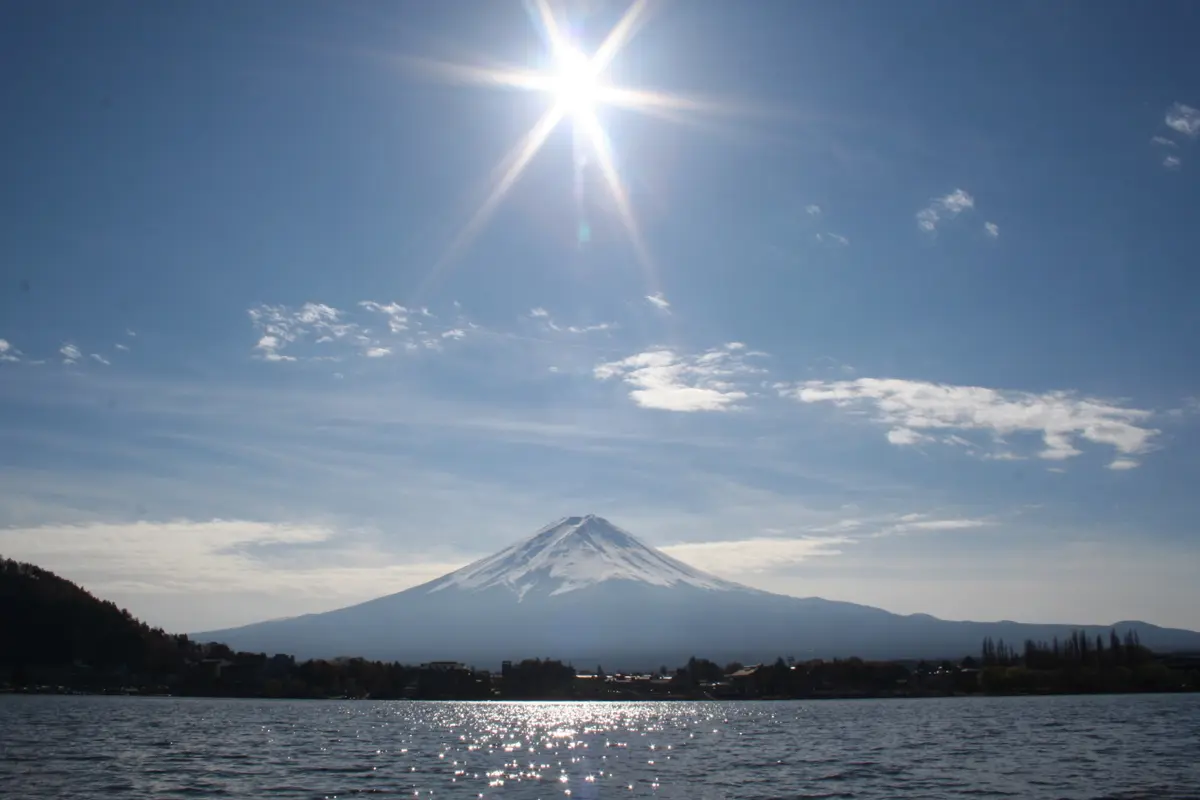
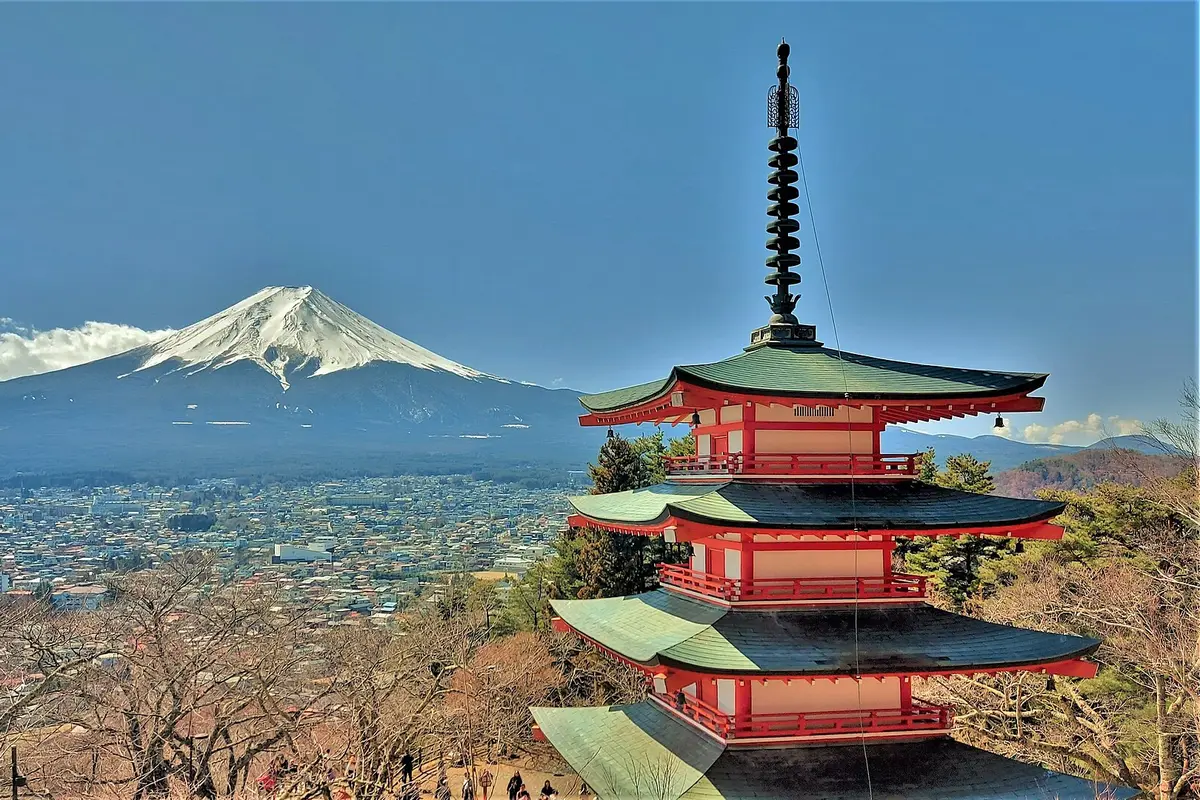
This is a guided coach day trip from Tokyo, listed at 10 hours. It runs along the Yamanashi side of Fuji and stops at Oishi Park on Lake Kawaguchi, the Chureito Pagoda viewpoint in Arakurayama Sengen Park, the spring ponds of Oshino Hakkai, and one stop on the mountain itself. That last stop follows the season: the 5th Station, at about 2,300 m, when it is operating, or the Mt Fuji Museum in the off-season. Guiding is in English, Mandarin or Cantonese. It is a sightseeing day, not a climb, and Fuji's visibility depends on the weather.
What each stop asks of you
Each stop asks something different. Oishi Park is a lakeside stop for the classic view across Lake Kawaguchi, framed by seasonal flowers. The Chureito Pagoda needs a climb of almost 400 steps. Oshino Hakkai is a village stroll between eight spring ponds, with food stalls. The 5th Station is significantly cooler than low-lying areas, according to JNTO, so a warm layer helps. The operator sets the time at each stop, so decide what you most want to see and spend your minutes there.
What is included, and what is not
Day tours differ most in the small print, so read these lines before you compare anything else. Entry fees for the sightseeing stops are covered, so you do not pay at each gate. Lunch is yours to buy, and cards may not be accepted everywhere, so carry some cash. Oshino Hakkai has food stalls beside the ponds, which makes it the easy place to eat.
- Included: pick-up and drop-off at Shinjuku or Tokyo Station, an air-conditioned bus, a guide and entry fees for the sightseeing stops
- Not included: hotel pickup and drop-off, meals and drinks, personal expenses
- Not allowed: large luggage (one hand-carry bag each) and unaccompanied minors
Group coach, private tour or public transport
The group coach is the simplest. The operator sets the route, the driver and guide handle the road, and you share the day with other travellers. A private tour is a separate product, priced per group, and several offer a custom itinerary, so you can ask for a different mix of stops. Public transport costs you the planning. The Japan National Tourism Organization says highway buses run from the Shinjuku Expressway Bus Terminal to Kawaguchiko Station in just under two hours, and that the JR Chuo Line reaches the lakes with a change at Otsuki. From Kawaguchiko Station, buses serve all five lakes.
Read next: Getting from Tokyo to Mt Fuji
The Hakone route is a different day
Some Fuji day tours swap the lakes for Hakone, a mountain resort area in Kanagawa, most of which lies inside Fuji-Hakone-Izu National Park. The usual stops are Lake Ashi, where tour boats cross the water, and Owakudani, a field of active volcanic vents reached by the Hakone Ropeway. Fuji appears as a backdrop rather than the main subject, and only on clear days. The ropeway can also be suspended in extreme weather or hazardous situations, so a Hakone day carries a second weather risk. Choose it for the ropeway and the lake, not for the mountain.
If you want the tea ceremony or the Gotemba outlets
This itinerary has no shopping stop. A different tour adds a tea ceremony and lets you choose between Gotemba outlet shopping and a hot spring visit in the afternoon. If either of those is why you are looking, book that tour instead, and check what it includes and where it starts. Do not assume the two tours share an itinerary, a meeting point or a finish.
The stop on the mountain changes with the season
Ask which mountain stop you will get, because the answer depends on the date. Yamanashi Prefecture's tourism site says the Fuji Subaru Line toll road to the 5th Station is generally open almost all year unless the weather is severe, and that it is closed to private vehicles for most of the climbing season, when shuttle buses run instead. The official climbing site publishes that restriction with its dates and points to the prefectural road corporation for live road status. Outside the operating season, this tour goes to the highest point it can reach and then to the Mt Fuji Museum.
Read next: When can you see Mt Fuji? By season
Check these before you pay
These are the points that differ between Fuji day tours, so compare them one by one rather than comparing photos. If a point is not stated, treat it as not included, and ask the operator before you pay. Operators also change stops for weather, traffic and season, so a listing describes a plan, not a promise. Save the page so you can compare it with your confirmation later.
- Where the coach leaves, and whether hotel pickup is included
- Which languages the guide speaks
- Whether entry fees and meals are covered
- Which mountain stop applies on your date
- What the cancellation terms say if Fuji stays hidden
Booking around the weather
No tour can promise a view, so book with room to move. Booked through GetYourGuide, this tour can be cancelled up to 24 hours before for a full refund, and you can reserve now and pay later. That lets you choose a date and watch the forecast. The refund rule has an edge: if the tour runs and Fuji stays hidden, no refund applies. Cancel on the forecast, before the cut-off, because afterwards a hidden mountain does not earn one.
Plan the evening loosely
Traffic decides when you are back. The return may be delayed by 2 to 3 hours or more, especially in peak season, so avoid anything time-sensitive that evening, such as a flight, a dinner reservation or a show. Bring snacks. Hotel pickup is not part of the tour, so you reach Shinjuku or Tokyo Station yourself, and the limit of one hand-carry bag each means large luggage stays at your hotel.
Who this isn't for
Skip this tour if you want a guaranteed clear view of Fuji, because nobody can sell one. Skip it if you need hotel pickup, if you need guiding in a language other than English, Mandarin or Cantonese, or if you have a flight or a booking on the evening you return. Travellers who find stairs hard should know the Chureito Pagoda viewpoint is reached by a staircase of almost 400 steps. If you want to stand on the summit, that is a separate climb with its own season and rules.
Frequently asked questions
Which Mount Fuji day tour should I book from Tokyo?
For one day and the classic views, a coach tour of the Yamanashi side covers Lake Kawaguchi, the Chureito Pagoda and Oshino Hakkai. Choose a Hakone tour for a ropeway and a lake boat, or a private tour to set your own stops. No tour can guarantee a view of Fuji.
Does this day trip climb Mount Fuji?
No. It is a sightseeing trip. The mountain stop is the 5th Station, at about 2,300 m, when it is operating, or the Mt Fuji Museum in the off-season. Climbing is separate, with its own season and rules set each year by the prefectures.
Where does the tour start, and is hotel pickup included?
The tour picks up at Shinjuku or Tokyo Station. Hotel pickup is not included. The meeting point can vary by option, so your confirmation shows the exact place and time.
Which language is the guide?
Guiding is in English, Mandarin or Cantonese. Select your language when you choose a date. If you need another language, look for a tour that lists it.
Is lunch included?
No. Meals and drinks are not included. Oshino Hakkai has food stalls, and cards may not be accepted everywhere, so carry some cash.
Can I cancel if the forecast looks bad?
Booked through GetYourGuide, yes, up to 24 hours before departure for a full refund. If the tour runs but Fuji stays hidden, no refund applies, so decide on the forecast before the cut-off.
Sources
- Fuji Five Lakes Area (Japan National Tourism Organization)
- Explore the Fuji Five Lakes (Japan National Tourism Organization)
- Fuji Subaru Line 5th Station and Mt. Fuji travel guide (Visit Yamanashi)
- Fuji-Subaru Line private vehicle restrictions (Official Mt. Fuji climbing site)
- A visit to Owakudani in Hakone (Hakone Tourist Association)
- Hakone (Wikipedia)
- Arakurayama Sengen Park (Wikipedia)