Season, visibility and the 5th Station
When can you see Mt Fuji? By season
Fuji hides most in the rainy season and shows best on crisp winter mornings. How season and time of day change the odds, and what each stop gives you.
Check dates and availability ↗Quick answer
Fuji is seen most often on crisp, clear winter days, and best in the morning, before haze and cloud build. It is often hidden in the rainy season, from early June to mid-July, and no tour can promise a view. Plan for a day that works without the summit: lakes, spring ponds, a pagoda hill and the 5th Station. Road access and climbing rules change each year, so check the official notices before you travel.
How often Fuji shows itself
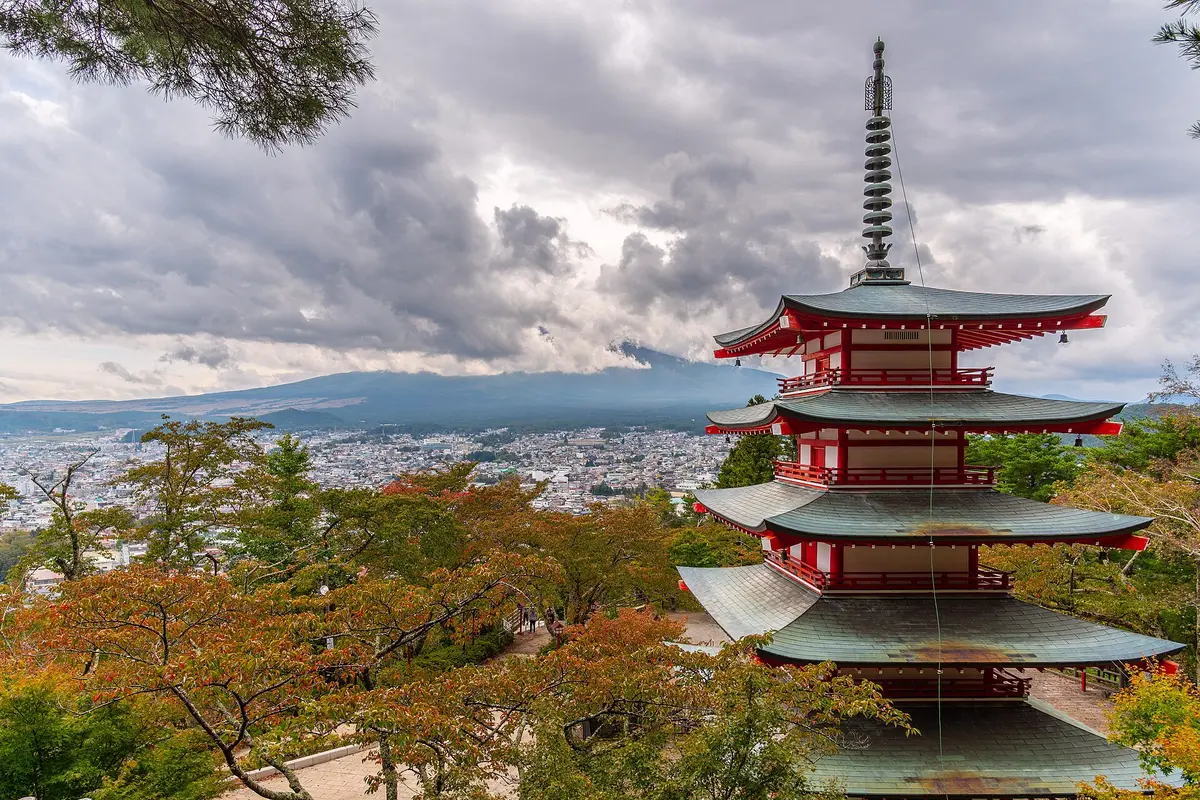
Nobody can promise a view of Mount Fuji, and the official sources do not try. The Japan National Tourism Organization says that from a distance, crisp, clear winter days offer the best viewing conditions, and that the mountain is often obscured by cloud in the rainy season, from early June to mid-July. For the Fuji Five Lakes it adds that the best views come in the morning, because haze and clouds tend to obstruct the mountain as the day wears on. Even from Tokyo, JNTO says Tokyo Tower shows Fuji best when the air is crisp and the weather is clear. None of this is a forecast. It tells you where the odds lean.
Season by season
A day trip works in every season because the lakes, ponds and viewpoints do not depend on the summit alone. The calendar changes the scene more than it changes your odds, and no season guarantees a clear peak. Dates for blossom and colour shift every year, so check a current forecast close to your trip, and treat this as the usual pattern, not a schedule.
- Winter: snow on the summit, and the clearest days from a distance
- Spring: cherry blossom, including at the Chureito Pagoda park, which has about 650 cherry trees
- Early summer: the rainy season, and lavender at Oishi Park
- Autumn: leaf colour along the north shore of Lake Kawaguchiko, which JNTO says peaks around early November
Time of day
Plan for the morning. The tourism board's advice for Lake Kawaguchiko is to go early and head to the north side of the lake, because haze and cloud build later. On a group tour you follow the operator's schedule, so what you control is the date and your attention: when the peak is out, take the photo first and look afterwards. Cloud can build as the day goes on and may not clear again. If a clear view is the main reason for your trip, a night near the lake lets you wait for a good morning instead of betting on one.
Lake Kawaguchi and Oshino Hakkai
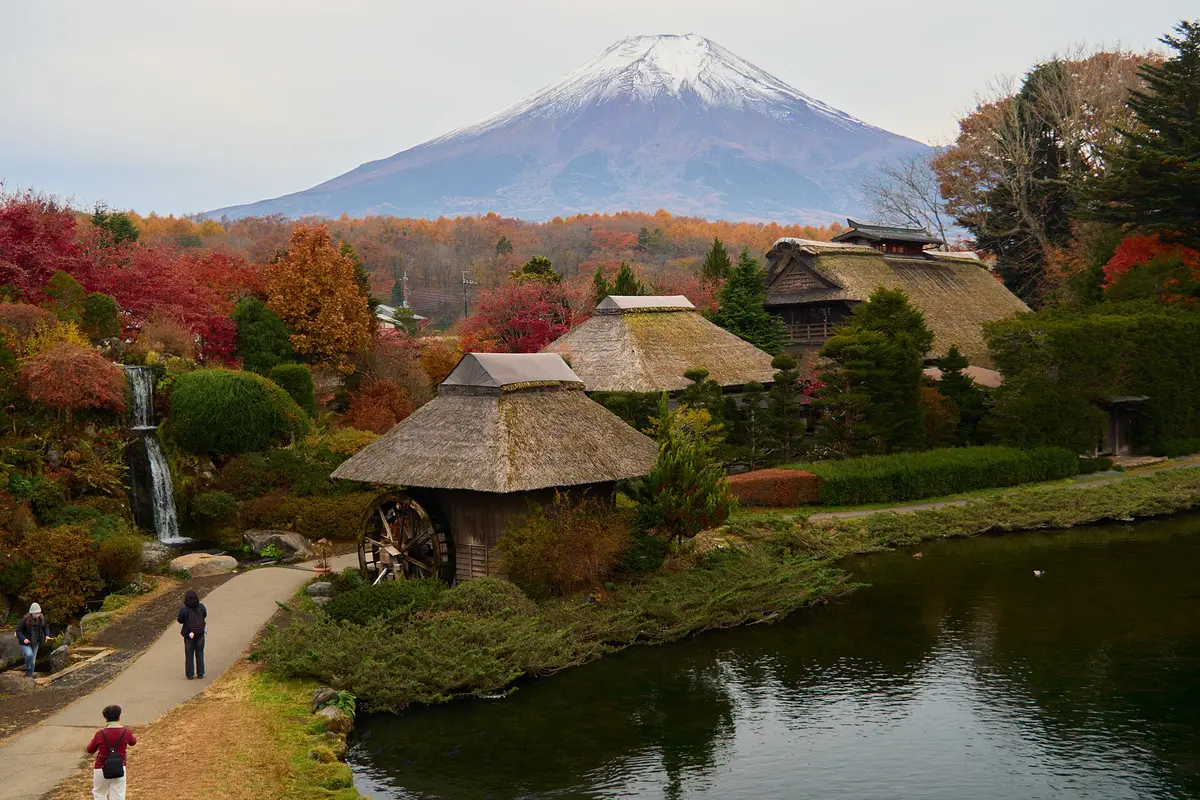
The Fuji Five Lakes formed when lava from Fuji dammed rivers, and Lake Kawaguchi is the only one of the five with an island. JNTO calls its views postcard-worthy from all around the shore, and Oishi Park is a lavender viewpoint in early summer. Oshino Hakkai is a set of eight spring ponds fed by aquifer water from Fuji. The springs are a Natural Monument of Japan and part of the World Heritage site. Thatched cottages, waterwheels and bridges give the village its look, and food stalls sit beside the ponds.
The Chureito Pagoda
The red five-storey pagoda stands in Arakurayama Sengen Park above Fujiyoshida. It is a memorial pagoda for the war dead, built of reinforced concrete in the mid-20th century, not an old temple tower. The staircase to the viewpoint, the Sakuya-hime Stairs, has almost 400 steps, so allow time and wear shoes with grip. The park ranks 10th on the Ministry of the Environment's list of 100 Views with Mount Fuji, and JNTO says the shot of pagoda and mountain together is quickly becoming the most sought-after photo in the Fuji Five Lakes area.
The 5th Station: what decides if you get there
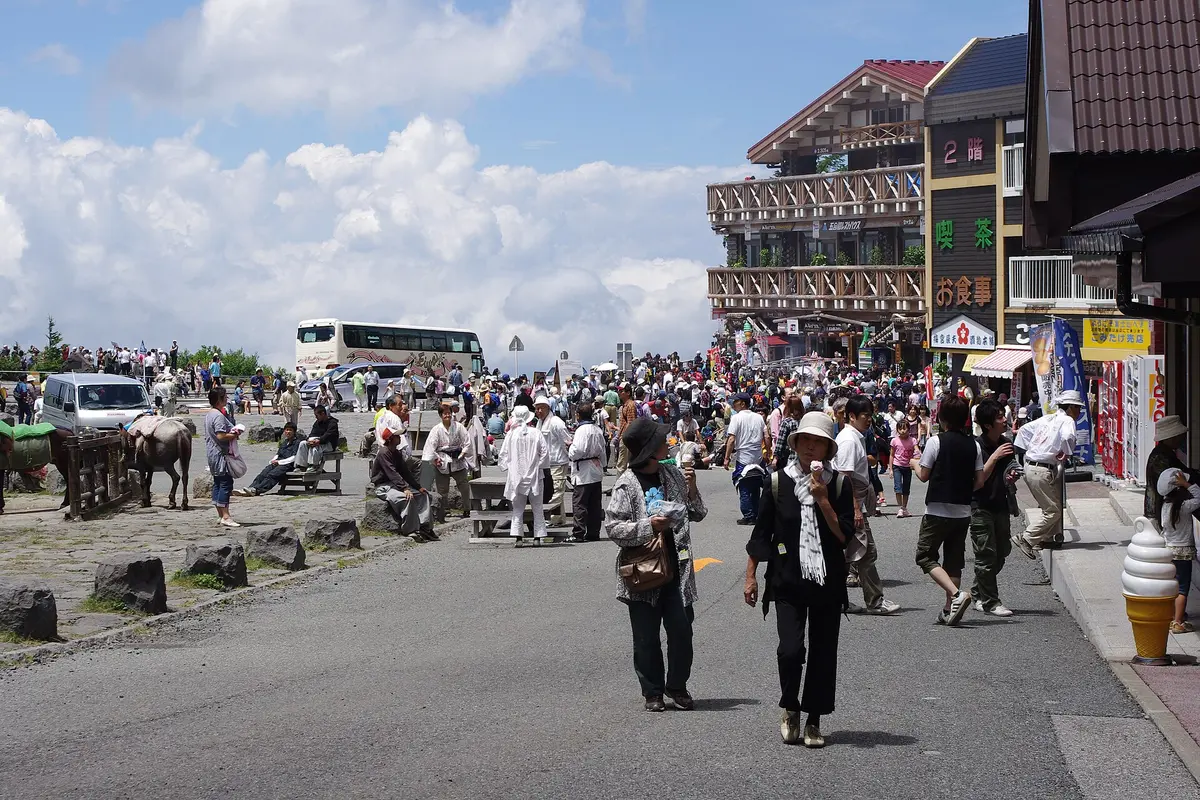
At about 2,300 m, the 5th Station is the highest point on the tour. Yamanashi Prefecture's tourism site says the Fuji Subaru Line toll road is generally accessible almost all year unless the weather is severe, so severe weather can close it for a while. The road is closed to private vehicles for most of the climbing season, and shuttle buses run from designated car parks. Some shops and rest houses there close for part of winter. This tour's mountain stop is the 5th Station in the operating season and the Mt Fuji Museum in the off-season; the operator decides which applies on your date.
Climbing rules are not day-tour rules
Official climbing rules apply to people who hike above the 5th Station. Since 2024 the Yoshida Trail has had a hiking fee, a daily cap and a gate that closes at set hours, and Yamanashi's tourism site says these restrictions do not affect sightseeing around the 5th Station. Details have changed and sources disagree on the fee, so check the official Mt. Fuji climbing site if you plan to hike. Hiking has its own fee, cap and gate hours, which a day-tour booking does not cover. JNTO says hiking is open from July through early September. The day tour does not climb.
What to wear and carry
Temperatures at the fifth-station start points are significantly cooler than in low-lying areas, according to JNTO, and the Fuji Five Lakes area itself sits at about 1,000 m. Bring a warm layer even if Tokyo is hot, and wear shoes you can climb steps in. Carry cash, because cards may not be accepted everywhere, and snacks in case traffic delays the return. The tour allows one hand-carry bag per person and does not allow large luggage, so leave suitcases at your hotel. Dress for the forecast on the day, in layers you can add and remove.
Length, language, children and access
The day is listed at 10 hours, and the return can run 2 to 3 hours late or more because of traffic. Guiding is in English, Mandarin or Cantonese. Children must be accompanied by an adult, and unaccompanied minors are not allowed. Steps are the main barrier: the Chureito staircase has almost 400 steps. The sources we read do not describe step-free access on the coach, so ask the operator before you book if anyone in your group uses a wheelchair or finds stairs hard.
Who this isn't for
A day trip is a poor fit if a clear view of Fuji is the whole point. You get one date, and no season guarantees the peak. It is also the wrong tool if you want to climb, if you cannot manage steps, if you need an evening free of deadlines, or if you want guiding in a language other than English, Mandarin or Cantonese. In those cases, consider a night near Lake Kawaguchi, a different route, or the official climbing season with proper preparation.
Read next: Mount Fuji day tour: how to choose
Frequently asked questions
When is Mount Fuji easiest to see?
The Japan National Tourism Organization says crisp, clear winter days give the best views from a distance, and mornings beat afternoons because haze and cloud build. No season guarantees it, and the rainy season, from early June to mid-July, often hides the mountain.
Can I see Fuji in summer?
Sometimes. JNTO says the mountain is often hidden by cloud in the rainy season, early June to mid-July. Outside it, no source we read gives a reliable pattern, so treat any date as uncertain.
Is the 5th Station always open?
No. The Fuji Subaru Line is generally accessible almost all year but can close in severe weather, and it is closed to private vehicles for most of the climbing season. This tour stops at the 5th Station in the operating season and the Mt Fuji Museum in the off-season.
Does the day tour climb Mount Fuji?
No. It is a sightseeing trip to viewpoints. Climbing has its own season, fees and entry rules, set each year, and the climbing restrictions do not affect sightseeing around the 5th Station.
What should I wear?
Layers, with a warm one for the 5th Station, which is significantly cooler than low-lying areas. Wear shoes for steps, carry cash and a small bag, and dress for the forecast on the day.
Can I check if Fuji will be visible tomorrow?
No source we read offers a visibility forecast. Check a weather forecast for the lakes area, and decide before the 24-hour cancellation cut-off. Once the tour runs, no refund applies if Fuji stays hidden.
Sources
- The Top 30 Spots for Viewing Mt. Fuji (Japan National Tourism Organization)
- Explore the Fuji Five Lakes (Japan National Tourism Organization)
- Fuji Guide: ways to see Mt. Fuji (Japan National Tourism Organization)
- Fuji Subaru Line 5th Station and Mt. Fuji travel guide (Visit Yamanashi)
- Fuji-Subaru Line private vehicle restrictions (Official Mt. Fuji climbing site)
- Fuji Five Lakes (Wikipedia)
- Arakurayama Sengen Park (Wikipedia)
- Oshino Hakkai (Wikipedia)